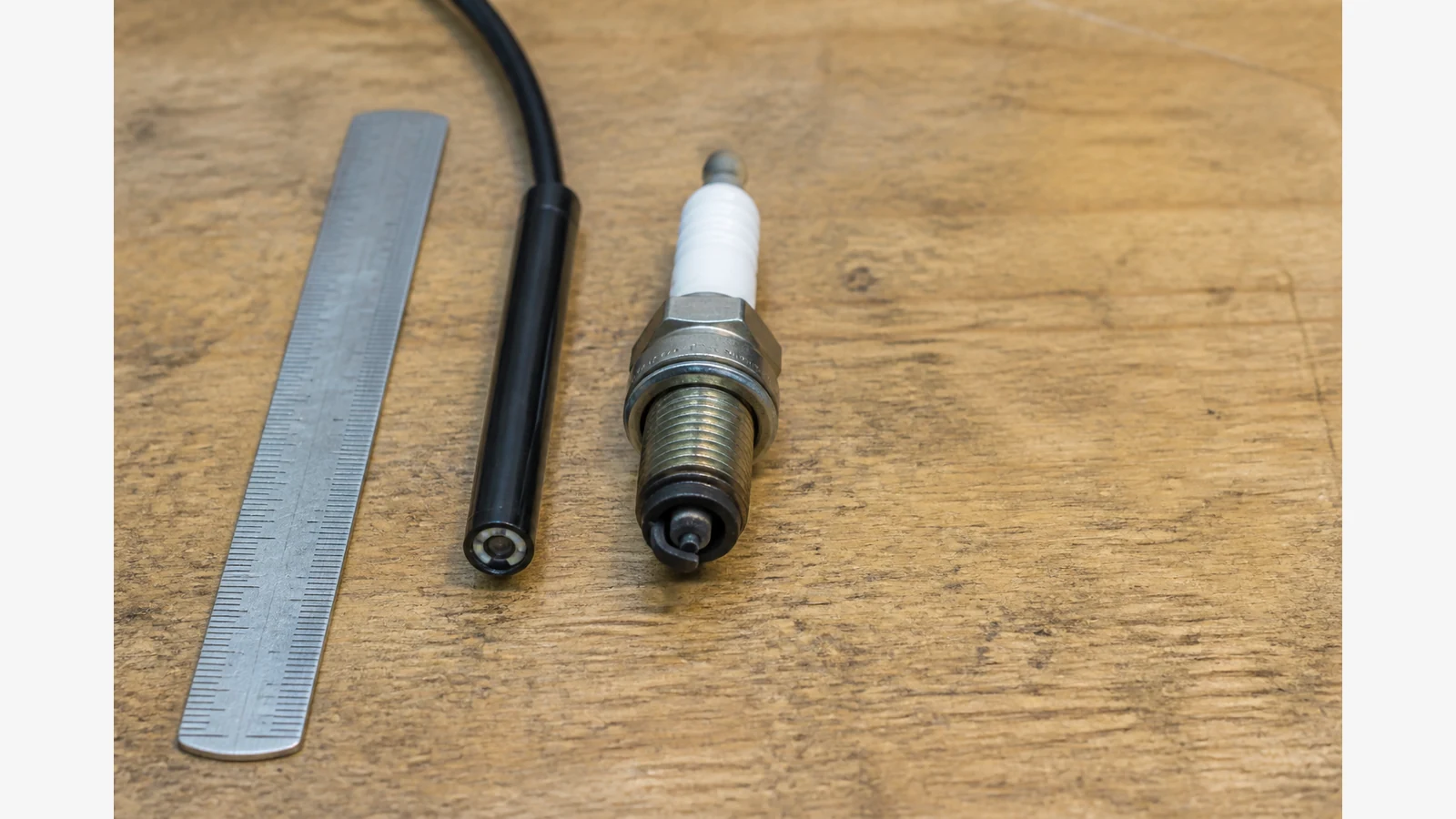
Spark Plug Hole Borescope Size Uk
For most petrol spark-plug access in UK garages, prioritise a slim probe in the roughly 5 mm class with clearance around the tip—not a head that only just scrapes the thread. Thicker multi-lens tips can still suit larger castings, but motorcycle, small-engine and injector ports often reject heads that “fit a car 14 mm plug hole” on paper.
Why diameter comes before lens count
Automotive buying guides treat probe diameter as the first fit constraint for spark-plug and precision ports, commonly discussing roughly 3.9–6.2 mm class probes for tight engine access. Public guidance also separates thinner probes for spark-plug holes and small passages from thicker probes for general under-bonnet work. If the tip will not enter cleanly, dual-lens or triple-lens features never get a chance to help.
See the QBH guide to choosing a borescope by probe size and the USA Borescopes automotive inspection camera buying guide for how trade buyers frame that diameter-first decision.
Opening type versus typical probe class
| Access | Typical probe class | When a thicker head is acceptable |
|---|---|---|
| Petrol spark-plug well (car) | Slim ~5 mm class with clearance | Only if you have measured clearance and cable bend room |
| Motorcycle / small-engine plug | Prefer the slimmest tip that still lights the bore | Rare—measure before assuming a car kit fits |
| Injector or precision service port | Often tighter than a plug hole | Do not force; escalate if geometry is unclear |
| Larger casting / general under-bonnet void | Thicker multi-lens heads can be fine | When sidewall view matters more than minimum diameter |
On the live UK offer, confirmed kit snapshots include a 5 mm dual-lens / 5 m probe and a 7.9 mm triple-lens / 5 m probe. Treat those figures as the diameter and cable facts to verify on the product page—not a promise that every motorcycle or diesel injector port will accept either tip.
Fit checklist before a weekend job
- Measure the smallest access you actually use (plug well, injector port, or casting opening)—not the marketing “fits most engines” claim.
- Leave clearance for cable bend and any side-view tip geometry; a tip that scrapes threads is already wrong.
- Clean debris from the plug well first, then feed the probe without force—step-by-step engine guides emphasise this habit.
- Decide whether you need sidewall evidence (scoring, carbon on walls) before choosing dual- versus triple-lens heads.
- If access is inconclusive on a high-value engine, stop and book a written professional inspection rather than guessing from a partial view.
Practical insertion technique is summarised in the Borescope HQ step-by-step car engine inspection guide.
Who should not buy on spark-plug fit alone
Buyers who mainly need 20 m+ sewer reels or certified drain CCTV surveys are shopping in a different category. A handheld 5 m kit sized for spark-plug work will not replace a dedicated drain survey reel. If your jobs are mostly engines, cavities and short internal runs, diameter-plus-length fit is the right first filter.
Related reading and next step
If you are comparing forward versus sidewall views after diameter is settled, read front vs side lens inspection cameras. For cable reach on domestic jobs, see whether a 5 metre cable is long enough. Confirm the live kit diameter and cable length on the Teslong UK product detail page before ordering for a weekend viewing or DIY check.