Front Vs Side Lens Inspection Camera Uk
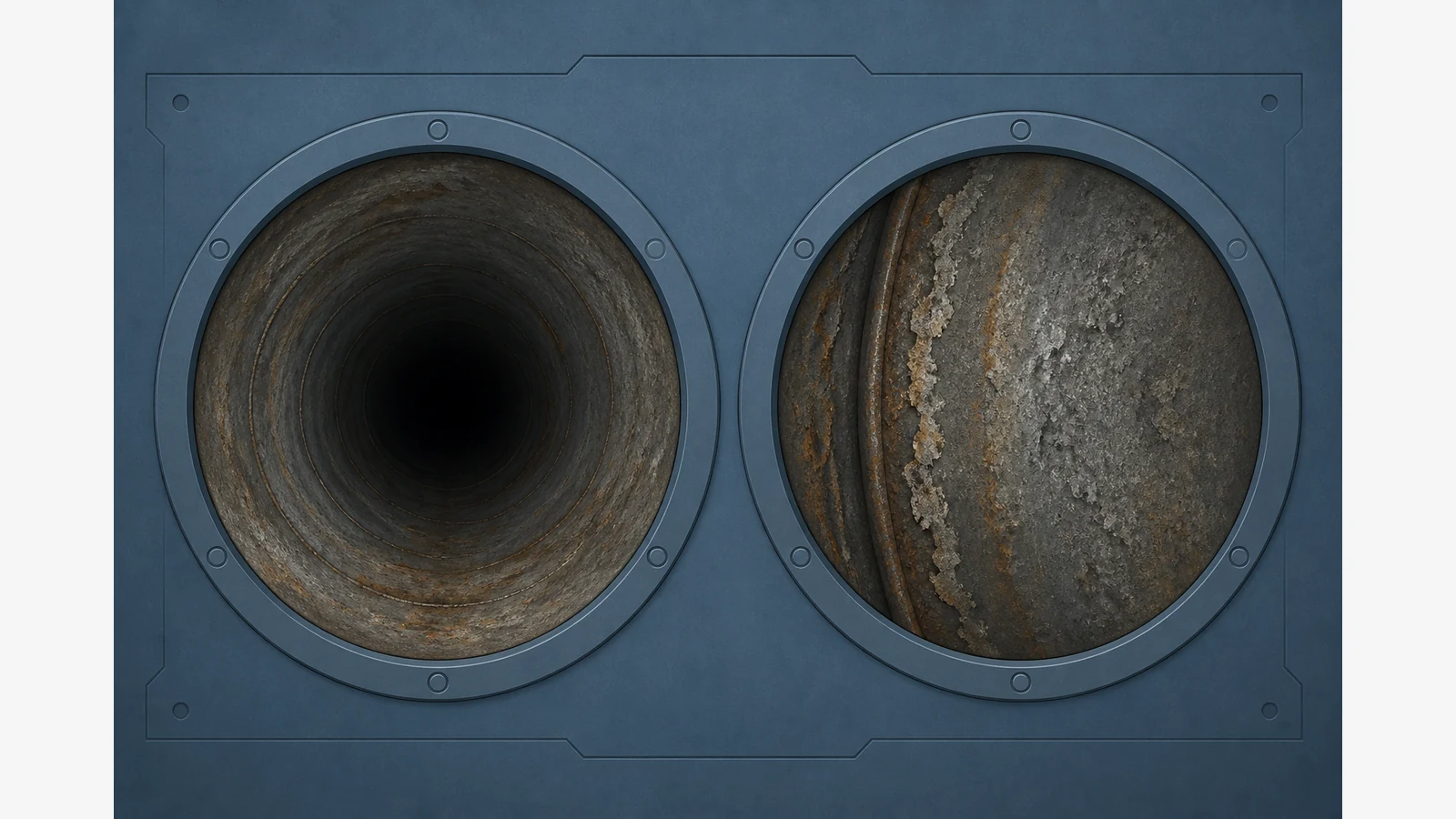
A forward lens tells you where you are; a side lens shows walls, rifling flanks and cylinder sides that a straight tip keeps missing. Choose diameter first, then decide whether sidewall evidence is required for the quote, purchase or repair decision in front of you.
What dual-lens systems are sold to do
UK trade listings explain dual-lens systems with a forward camera for general scenes and a side camera for sidewall images in pipes and similar voids. Automotive write-ups describe dual lenses helping view cylinder walls and carbon without constantly repositioning the scope. Survey equipment retailers similarly position side cameras for high-definition wall images in narrow pipes versus front cameras for general inspection.
See the ATP Instrumentation UK articulating dual-lens borescope page, the ATP UK blog on dual-lens automotive use, and Surveyors Equipment UK dual-lens borescope overview.
Job matrix: when side view changes the answer
| Job | Forward view mainly answers | Side view mainly answers |
|---|---|---|
| Engine cylinder walls | Piston crown / general orientation | Vertical scoring and wall texture |
| Pipe joints / short internal runs | Blockage location ahead | Joint lips, scale and side cracks |
| Cavity insulation edges | Whether the void is open | Edge fill and wall contact lines |
| Rifle groove flanks | Overall bore brightness | Land/groove flank condition |
Articulation is a separate purchase decision from lens count: a dual-lens tip is not automatically an articulating tip. Thicker multi-lens heads can also lose access into the smallest ports—settle diameter before lens count. Confirmed live SKU snapshots on this site include a 5 mm dual-lens / 5 m kit and a 7.9 mm triple-lens / 5 m kit; verify which tip fits your smallest access before upgrading for extra views.
Who should not upgrade
Occasional users who only need a quick “is something blocking the line” forward look may not benefit from multi-lens complexity. If your work is mostly long boundary drains, a handheld dual-lens kit is still the wrong category versus a dedicated reel—see is a 5 metre inspection camera cable long enough and the drain camera inspection guide.
Reader next step
Match the smallest access diameter first—start with spark-plug hole borescope size for engine ports—then decide if sidewall evidence is required. For scoring specifically, read why compression tests miss bore scoring. Confirm the live dual- versus triple-lens options on the Teslong UK product detail page.