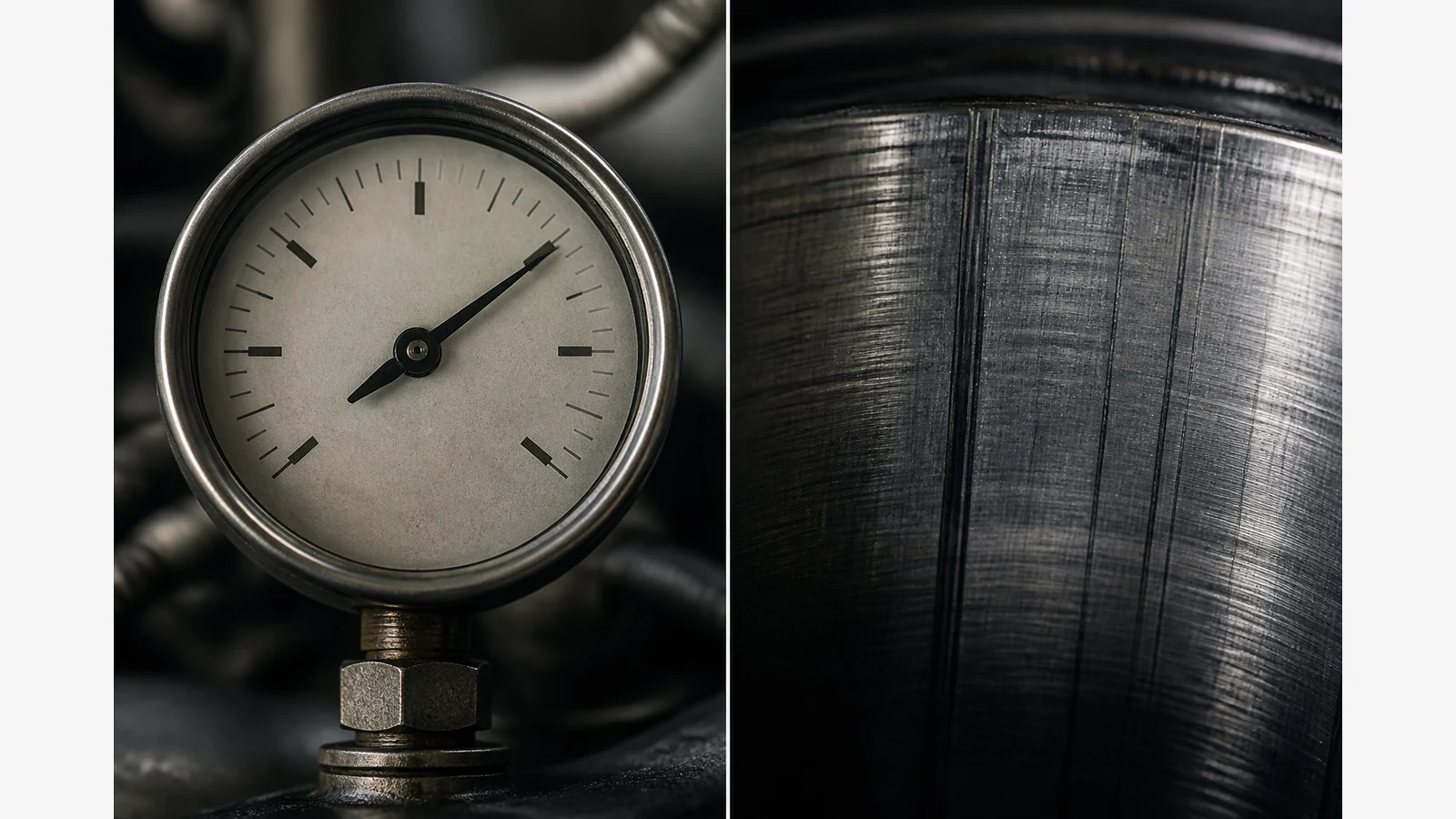
Why Compression Test Misses Bore Scoring
A healthy compression or leak-down reading can still hide early cylinder-wall scoring. Pressure tests mainly ask whether the cylinder seals; they do not photograph vertical grooves on the wall. That is why UK used-performance buyers who hear “no symptoms” and “compression is fine” are still steered toward a visual wall check on known failure patterns.
What compression and leak-down can—and cannot—show
Compression and leak-down can flag worn rings, burnt valves or a head-gasket leak path when numbers fall outside an acceptable band. They can stay “acceptable” while scoring is already visible as repeated vertical grooves on the bore wall. Looking only at the piston crown through a forward tip also misses the story: sidewall texture is the evidence that matters.
Specialist guidance on affected water-cooled engines stresses that checking cylinders with a borescope is critical before purchase, and that spark-plug-only views can be inconclusive compared with sump-side inspection on some blocks. Read the LN Engineering how-to on bore scoping for cylinder bore scoring for those access caveats.
Why side-wall viewing changes the decision
Public cylinder-camera practice distinguishes scoring as repeated vertical grooves and notes that dual-lens or side-view tips help inspect walls once fit is confirmed. UK trade listings describe forward lenses for a general scene and side lenses for wall and pipe sidewall images—the same geometry problem as reading a cylinder wall rather than staring at the crown.
See Teslong cylinder camera engine inspection best practices and the ATP Instrumentation UK dual-lens borescope product page for how side lenses are positioned for wall work.
Photo-reading checklist (not a rebuild quote)
- Even crosshatch — consistent honing texture without deep vertical trails usually reads as healthier wall condition on a simple first look.
- Vertical grooves — repeated scoring lines along the stroke direction are the pattern buyers and specialists watch for; photograph several clock positions if access allows.
- Partial view only — if you cannot see the wall clearly through the plug hole, treat the check as inconclusive rather than “passed”.
- Walk away or renegotiate — use photos to decide next commercial steps; do not self-diagnose rebuild severity from a phone screen alone.
Access caveat
Some engines need sump-side access for a conclusive view. A handheld camera through the spark plug can be a useful first filter when the wall is clearly visible; it is not a guarantee that early scoring is absent everywhere. For probe diameter limits on plug holes, start with spark-plug hole borescope size. For when forward versus side lenses matter on the same job, see front vs side lens inspection cameras.
Who this is not for
Anyone expecting a handheld inspection camera to replace a specialist written pre-purchase inspection on a high-value purchase is in the wrong workflow. Use camera photos to ask better questions—or to walk away earlier—not as a certificate that the engine is clear.